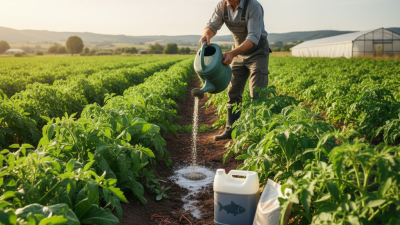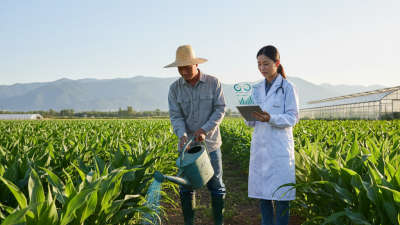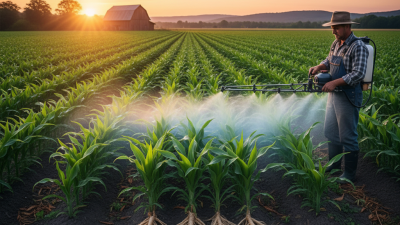
Choosing a supplier for Water Soluble Organic Nitrogen Fertilizer takes more than comparing prices. Growers need a product that fits their crop, water quality, application method, and local growing conditions. A clear label, consistent nutrient analysis, and practical technical support can make a real difference when fertilizer is mixed into a tank or fed through irrigation lines.
Specifications matter. Ask suppliers for nitrogen content, solubility information, recommended use rates, and batch documentation. Check whether the product is suitable for your equipment and whether the supplier can explain its composition in plain language. These details help buyers assess options without relying on broad claims about yield or plant performance. Results depend on crop, soil, climate, and management. No product works the same everywhere.
That sounds simple. It rarely is. Supplier websites may use similar terms while describing products with different ingredients or handling needs. Compare the actual documentation, not just the headline. Consider lead times, packaging sizes, storage guidance, and how quickly a supplier answers technical questions. For smaller farms, a responsive contact may be as valuable as a wide catalogue.
This guide introduces notable supplier options and the questions worth asking before purchase. It is not an endorsement or a substitute for product labels and qualified agronomic advice. Some details can be difficult to compare across companies; that limitation deserves attention. Careful buyers can use the information to shortlist suppliers, verify claims, and select a product suited to their own operation.
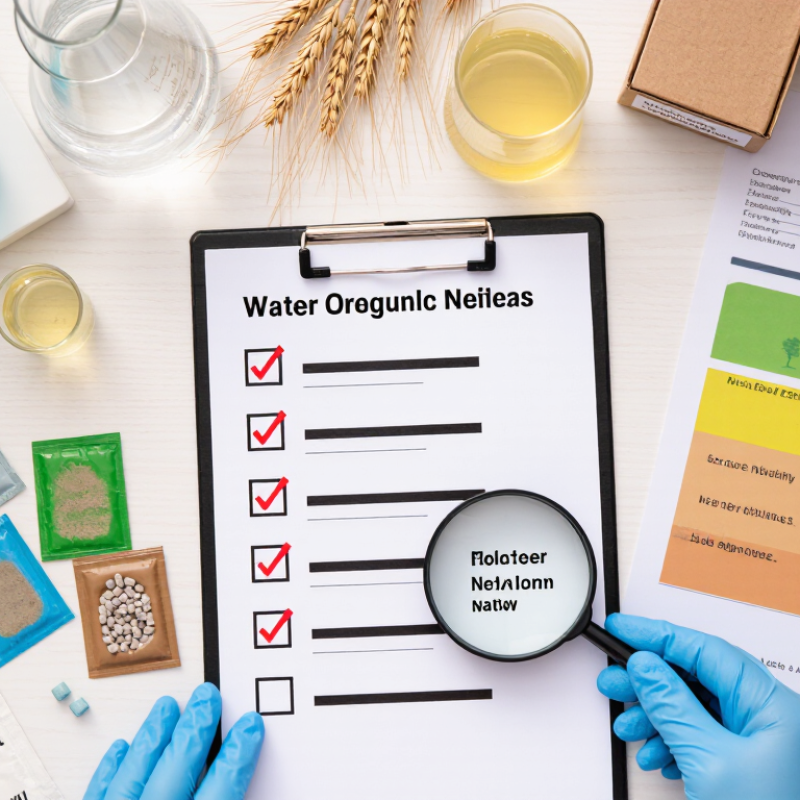
Water-soluble organic nitrogen fertilizers should be defined by three label facts: source, nitrogen form, and guaranteed percentage of nitrogen. Source describes the raw material, such as fish hydrolysate, plant protein, compost extract, or animal-derived inputs. These sources behave differently in storage, soil, and fertigation systems. They are not interchangeable.
Nitrogen form matters more than marketing language. A product may contain amino acids, soluble peptides, ammoniacal nitrogen, or small amounts of nitrate. Amino acids and peptides are organic nitrogen forms, while ammoniacal and nitrate nitrogen are mineral forms. The AAPFCO Official Publication 2024 emphasizes separating nitrogen categories in fertilizer labeling. Buyers should request total nitrogen, organic nitrogen, and water-soluble nitrogen values separately. Small detail. It changes product comparison.
Guaranteed %N shows concentration, not field performance. A liquid product labeled 8% total nitrogen supplies 8 kilograms of nitrogen per 100 kilograms of product, before density adjustments. USDA NRCS Nutrient Management Standard 590 commonly uses first-year manure nitrogen availability estimates near 30–50%, depending on material and application. Soluble products may release faster, but mineralization still depends on temperature, microbes, moisture, and irrigation. The 2023 FAO fertilizer outlook also reports continuing pressure to improve nutrient-use efficiency, not merely increase nutrient rates. I would question any supplier offering a high %N without amino-acid data, pH, density, or stability results. A clear specification sheet is more useful than a bold claim.
Top Water Soluble Organic Nitrogen Fertilizer Suppliers
A fertilizer grade is a three-number label showing N–P₂O₅–K₂O percentages. The first number represents total nitrogen by weight. The second shows phosphate, expressed as P₂O₅. The third indicates potash, expressed as K₂O. A 12-4-8 grade contains 12% nitrogen, 4% P₂O₅, and 8% K₂O. These values are not raw elemental phosphorus and potassium. Read the label carefully.
When comparing water-soluble organic nitrogen fertilizer suppliers, request a current certificate of analysis. It should identify nitrogen forms, moisture, organic matter, and guaranteed nutrient percentages. Confirm that the product dissolves without heavy sediment in your actual irrigation water. Batch consistency matters. Small details matter.
Growers should also consider how quickly organic nitrogen becomes available. Soil temperature, microbial activity, and moisture can change performance. A high first number does not always mean faster plant response. It is easy to assume that two products with identical grades behave alike, but that assumption can fail. I would test a small area before changing a complete feeding program. Record dilution rate, water clarity, leaf color, and growth response. Supplier documentation helps, but field evidence deserves equal attention.
Fertilizer grades are expressed as N–P₂O₅–K₂O percentages by weight. The chart compares representative water-soluble organic fertilizer grades without identifying suppliers or brands.
Higher nitrogen values indicate products primarily positioned for vegetative growth, while phosphorus and potassium values show the relative contribution of those nutrients in the labeled grade.
Supplier data sheets can look alike until the nitrogen fractions are separated. Compare total nitrogen, organic nitrogen, and water-soluble nitrogen using the same reporting basis. A value reported as a percentage by weight may not match one reported per volume. Units matter. Total N describes all measured nitrogen, while organic N identifies its organic fraction. Soluble N indicates what dissolves under the stated test conditions; it does not guarantee identical release or uptake in every growing medium. Ask for methods.
Check whether the supplier provides recent batch data, not just a typical specification. For pH, note the sample concentration and water used for testing. EC also depends on the extraction ratio, temperature, and meter method, so compare values only when those conditions match. A jar test can reveal sediment or slow dissolution, but it cannot replace laboratory analysis. I would also check whether the stated organic N and soluble N figures are measured independently or inferred, since unclear methods make comparisons weaker. Before ordering, request a certificate of analysis and confirm the expected ranges for each parameter. A small mismatch in EC may matter in a sensitive fertigation setup.
Top Water Soluble Organic Nitrogen Fertilizer Suppliers
Verify Nitrogen Claims with Kjeldahl Analysis and Batch %N Reports
A fertilizer’s water solubility does not confirm its nitrogen content. Ask suppliers for a batch-specific report, not only a product brochure. The report should show total nitrogen as a percentage, the test method, sample date, and lot number. Match that lot number to the delivered bags or container. Small details matter.
Kjeldahl analysis is widely used to measure organic and ammoniacal nitrogen. Standard Kjeldahl testing may not capture nitrate nitrogen unless the method includes an appropriate modification. Ask the laboratory which nitrogen forms its result covers. Compare reports on the same basis, such as product weight as received or dry weight. Otherwise, moisture differences can make two batches look more alike—or less alike—than they are. I would still check the method notes; a familiar test name is not the whole story.
Tips: Request the full certificate of analysis and confirm that its batch number matches the shipment. Keep a sealed sample from each delivery for follow-up testing. If reported %N shifts between batches, ask the supplier to explain the variation before adjusting application rates. A clear answer should identify the test basis and relevant nitrogen forms. Sometimes paperwork is messy. That deserves a question, not an assumption.
| Verification dimension | What the batch report should show | Suitable check or method | How to interpret the result | Buyer review point |
|---|---|---|---|---|
| Total nitrogen (% N) | Measured result, unit, test date, laboratory, and whether reported as received or on a dry-matter basis. | Kjeldahl digestion and determination, with the laboratory method identified. | Kjeldahl commonly measures organic nitrogen and ammoniacal nitrogen. Nitrate and nitrite are generally not fully included unless an appropriate reduction or modification is used. | Confirm the stated method covers the nitrogen forms claimed on the product specification. |
| Nitrogen basis | Clearly labeled % N as received and/or % N on a dry-matter basis. | Measure moisture and state the calculation basis. Dry-basis conversion: %Ndry = %Nas received ÷ (1 − moisture fraction). | For example, 10.0% N as received at 5.0% moisture converts to approximately 10.53% N on a dry basis. This is a calculation example, not a product result. | Compare like-for-like bases; do not compare a dry-basis guarantee with an as-received result. |
| Nitrogen form | Declared nitrogen fractions, where applicable: organic N, ammoniacal N, nitrate N, and other declared forms. | Use methods appropriate to each nitrogen form; request separate results where a total-N method does not distinguish forms. | A total-N result alone does not establish how much nitrogen is organic or how much is present in other forms. | Check that individual fractions and their sum are consistent with the declared total, allowing for rounding and method uncertainty. |
| Water solubility | Test concentration, water temperature, mixing time, and soluble or insoluble residue result. | A documented dissolution and filtration or residue procedure under specified conditions. | “Water soluble” is meaningful only with the test conditions stated; results can vary with concentration, temperature, and water quality. | Compare the test conditions with intended application and equipment requirements. |
| Moisture | Moisture percentage, test method, and reporting basis. | A validated moisture determination suitable for the product matrix. | Moisture affects product handling and the relationship between as-received and dry-basis nitrogen results. | Check that the moisture value is from the same batch represented by the nitrogen result. |
| Sample and batch traceability | Batch or lot code, sample identification, sampling date, receipt date, and analysis date. | A certificate of analysis linked to a documented sampling and sample-handling record. | A result is useful for verification only when it can be tied to the delivered batch. | Match the report’s lot code to the packaging and purchase documentation. |
| Laboratory quality | Laboratory name, method reference or description, units, and any stated measurement uncertainty or quality-control information. | Review the laboratory’s scope and quality controls for the specific analytical method and material type. | Method suitability and reliable sample handling are important when comparing a measured value with a guaranteed minimum. | Request clarification if the report omits the method, basis, or batch identification. |
| Specification comparison | Guaranteed %N, actual batch result, applicable tolerance, and governing product or regulatory specification where relevant. | Compare the batch result with the written specification using the same basis and compatible analytical methods. | A test result is not, by itself, proof of compliance with every jurisdiction’s labeling or fertilizer rules. | Verify applicable local requirements independently and retain the batch report with purchasing records. |
Use batch-specific analytical reports for supplier qualification. No supplier or product performance data are represented in this verification table.
Urea is a useful nitrogen benchmark because its standard grade contains 46% nitrogen by weight. A water-soluble organic fertilizer with 10% nitrogen supplies much less nitrogen per kilogram of product. That difference matters when comparing prices, storage needs, and application rates. Check the basis. Is the guaranteed analysis stated as sold, or on a dry-matter basis? For liquid products, density also affects how much nitrogen each litre delivers.
Supplier grades can vary in total nitrogen, soluble nitrogen, and the share supplied as organic compounds. Read the guaranteed analysis, not just the headline percentage. Then calculate cost per kilogram of nitrogen: divide the product price per kilogram by its nitrogen fraction. For a liquid, convert litres to kilograms using its stated density. This is a nutrient comparison, not proof of equal crop response. Nitrogen from urea and organic sources can behave differently in soil, and performance depends on crop, timing, temperature, and handling. Check the basis again. A clear label helps, but it cannot replace a field test. Run a small trial. Compare treated and untreated strips, record crop response, and note whether the product dissolves cleanly in the farm’s water. Some supplier information may leave questions unanswered; request a current analysis before making a large purchase.