10 Tips for Using Water Soluble Potash Fertilizer Effectively?
Water Soluble Potash Fertilizer plays a crucial role in modern agriculture, providing essential potassium to crops. According to the International Fertilizer Association, around 30% of crop yield is attributed to potassium application. This fertilizer enhances nutrient uptake and improves overall plant health, leading to increased productivity.
However, many farmers face challenges in using Water Soluble Potash Fertilizer effectively. Inaccurate application rates can lead to nutrient imbalances in soil, potentially harming plant development. Studies indicate that improper use results in a 20% decline in crop yields.
Understanding the proper techniques for using this fertilizer is essential for maximizing its benefits. Transparent data from agricultural research shows that tailored application strategies can enhance crop responses significantly. Effective use is not just about adding more; it’s about using the right amount at the right time. A focus on targeted application will lead to healthier crops and sustainable farming practices.
Understanding Water Soluble Potash: Composition and Benefits
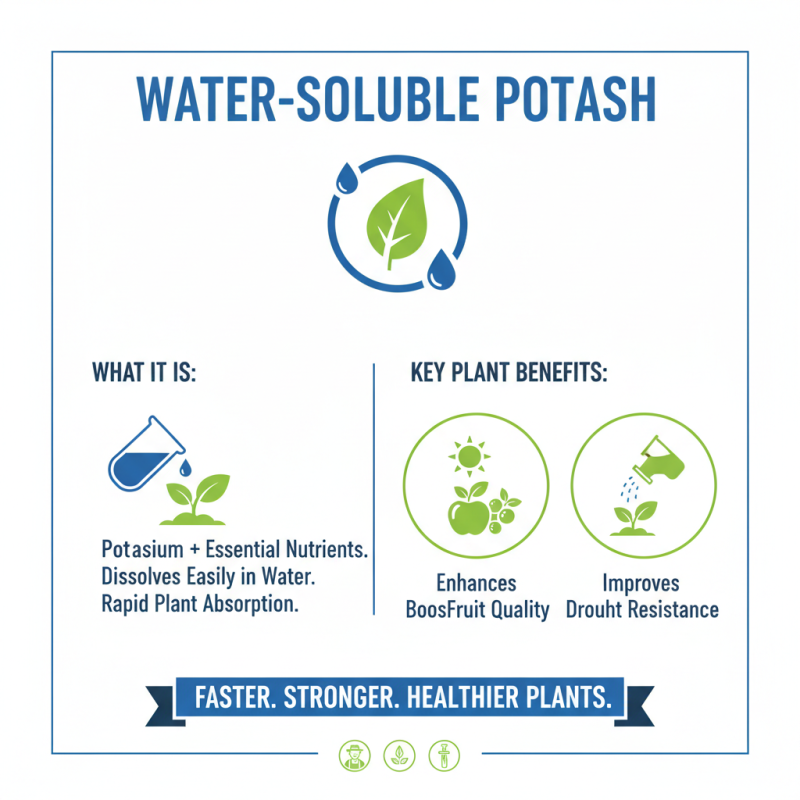
Water soluble potash, composed primarily of potassium and other essential nutrients, plays a vital role in plant health. It dissolves easily in water, allowing for quick absorption by plants. This characteristic makes it a preferred choice for farmers and gardeners. Potassium is crucial for various plant functions. It contributes to photosynthesis, enhances fruit quality, and improves drought resistance.
However, using water soluble potash effectively requires understanding its application. Over-application can lead to nutrient burn, negatively impacting plant growth. Measuring the ideal concentration is essential. A test of soil nutrient levels is a good practice before application. Also, combining with other fertilizers can create imbalances. Testing compatibility beforehand can prevent issues.
Monitoring your plants closely after application is crucial. Signs of deficiency or excess will guide future applications. Not every plant requires the same amount of potash. Some may thrive on minimal amounts. Finding the right balance takes practice and reflection. It’s a journey toward optimal growth.
Identifying Optimal Crops for Water Soluble Potash Application
When considering water-soluble potash application, selecting the right crops is essential. Many vegetables thrive with this fertilizer, especially those that require high potassium levels. For example, tomatoes, peppers, and potatoes benefit significantly. These crops often show improved yields and quality with proper use.
Tip 1: Monitor the soil. Test it regularly to understand potassium levels. This helps adjust fertilizer amounts.
Fruits like apples and grapes also respond well to water-soluble potash. Their development improves, leading to better growth and flavor. However, be cautious. Overapplication may lead to imbalances that affect other nutrients.
Tip 2: Timing matters. Apply the fertilizer at key growth stages, not randomly. This ensures that the plants get nutrients when they need them most.
Another consideration is crop rotation. Rotating with legumes can enhance soil quality and help manage potassium levels. Yet, every grower faces challenges. Not all regions have the same soil types or nutrient needs. Adjustments based on local conditions are crucial for success.
Tip 3: Observe your crops closely. Look for signs of deficiencies or excesses. Making timely decisions can dramatically impact yields.
10 Tips for Using Water Soluble Potash Fertilizer Effectively
| Crop Type |
Optimal Application Rate (kg/ha) |
Best Application Time |
Recommended Frequency |
Benefits |
| Tomatoes |
150 - 200 |
Pre-flowering |
Every 4 weeks |
Improves fruit quality and yield |
| Potatoes |
120 - 180 |
During tuber development |
Every 3 weeks |
Enhances tuber size and quality |
| Corn (Maize) |
100 - 150 |
At the 5-6 leaf stage |
Every 4 weeks |
Boosts grain filling and overall yield |
| Fruit Trees |
200 - 300 |
Post-fruit set |
Every month during growing season |
Supports fruit development and sugar content |
| Leafy Greens |
80 - 120 |
During early growth |
Every 2-3 weeks |
Improves leaf growth and nutrient uptake |
Recommended Application Rates Based on Soil Testing Data
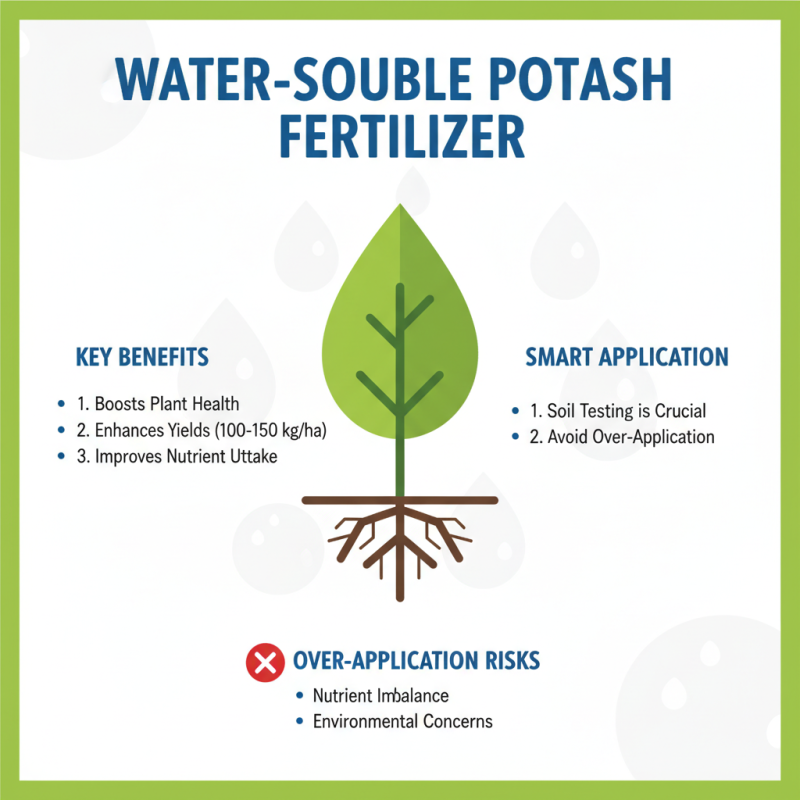
Water soluble potash fertilizer is essential for plant health, especially for crops requiring potassium. Accurate application rates based on soil testing data can optimize your fertilizer use. Research indicates that applying 100-150 kg/ha of potash can significantly enhance yields in potassium-deficient soils. However, over-application can lead to nutrient imbalance and environmental concerns.
Understanding soil composition is crucial. Conduct regular soil tests to determine potassium levels. If results show low levels, adjust your application. Consistent testing ensures you provide the right amount of nutrients. A well-balanced approach can enhance soil fertility and crop performance.
Tips for effective use include applying the fertilizer during critical growth stages. Root development and fruiting stages are vital times. Use precision applicators to target root zones effectively. Also, consider weather conditions; dry soil can hinder nutrient absorption. Lastly, monitor plant responses closely. Early signs of deficiency can indicate an imbalance, prompting necessary adjustments. By following these practices, you can maximize the benefits of water soluble potash while minimizing potential drawbacks.
Timing and Methods for Applying Water Soluble Potash in Crop Production
Timing and methods for applying water-soluble potash are critical in crop production. Research indicates that potassium boosts crop yield and quality. Field studies show that potassium can enhance fruit size by up to 20%. Applying it at the right time maximizes these benefits.
During the growing season, it's crucial to monitor plant stages. Applying water-soluble potash during flowering can improve fruit set. Moreover, using it just before harvest can increase sugar content in crops. Timing can vary based on crop type and soil conditions. Regular soil tests can provide clarity on potassium levels.
Tip: Apply water-soluble potash in split doses. Early application improves nutrient uptake, while later doses support fruit development. This method aligns with industry reports suggesting that split applications can reduce leaching and enhance efficiency.
Remember, not all methods suit every situation. Observing soil and weather conditions is essential. Sometimes, farmers overlook these factors and face reduced yields. Reflecting on past applications can reveal insights for future improvements. Adjusting practices based on previous outcomes can lead to better crop production.
Water Soluble Potash Fertilizer Application Timing and Effectiveness
Monitoring Crop Response: Indicators of Effective Potash Fertilization
Monitoring crop response is crucial for successful potash fertilization. Indicators of effective application include plant color and vigor. Healthy crops often have lush green leaves. When crops show signs of yellowing, it may indicate potassium deficiency. Regularly inspecting plants helps identify such issues early.
Soil tests provide valuable insights. However, results can sometimes be misleading. Nutrient availability changes with weather, affecting plant uptake. Observing the crop's growth stages can also guide adjustments in fertilization. For example, older plants might show different nutrient needs compared to younger ones. Watching for signs of stress is essential, as this may also reflect potash issues.
Periodic leaf analysis can further refine potash application strategies. These tests reveal nutrient levels in the plant tissue. But, timing is everything. Delays in testing may lead to missed opportunities to correct deficiencies. Growers should remain vigilant, adjusting their approaches based on these findings to optimize growth and yield.