How to Choose the Best Water Soluble Micronutrient Fertilizer?
Choosing the best Water Soluble Micronutrient Fertilizer is crucial for healthy plant growth. These fertilizers provide essential nutrients, promoting vibrant blossoms and abundant harvests. However, with numerous options available, making a choice can be overwhelming.
Understanding your soil and plant needs is fundamental. Not all plants require the same micronutrients. Some thrive on iron, while others need zinc. Conducting a soil test can offer valuable insights. This knowledge helps pinpoint deficiencies and select an appropriate fertilizer.
Additionally, consider the fertilizer's formulation. Some are designed for specific crops, while others are more versatile. Pay attention to the product label. It should list the micronutrients and their concentrations. A good Water Soluble Micronutrient Fertilizer should reveal its sources and benefits clearly. Balancing efficiency and effectiveness can sometimes be challenging. Repeated applications may be needed, but over-fertilization can cause harm. Being mindful of your choices is key to nurturing plants successfully.

Factors to Consider When Choosing Water Soluble Micronutrient Fertilizers
Choosing the right water-soluble micronutrient fertilizer requires careful consideration. Start by analyzing the specific needs of your plants. Different plants require different micronutrients. A soil test can reveal deficiencies and help you tailor your fertilizer choice. It's essential to know what your plants are lacking before making a purchase.
Look beyond just the nutrient content. The solubility of the product matters significantly. Some fertilizers dissolve quickly, delivering nutrients faster to the roots. Others may take time to break down, potentially delaying benefits. Read the product labels for solubility details to make an informed decision.
Pay attention to the source of information. Rely on well-researched articles or expert advice rather than anecdotal evidence. It’s important to understand how the micronutrient ratios affect plant health. Misinformation can lead to unnecessary spending or even harm your plants. Reflect on your prior experiences as well. Past mistakes can guide you to make better choices in the future.
Water Soluble Micronutrient Fertilizer Analysis
Understanding the Role of Micronutrients in Plant Growth
Micronutrients play a crucial role in plant growth, often overshadowed by macronutrients. These essential elements include iron, manganese, zinc, copper, boron, molybdenum, and chlorine. Each micronutrient serves a unique function. For example, iron is vital for chlorophyll production, while zinc supports enzyme function. Without adequate micronutrients, plants may exhibit stunted growth and poor yield.
Understanding the specific needs of your plants can help you tailor micronutrient applications. Soil testing can provide insights into deficiencies. If a plant shows yellowing leaves, it might lack nitrogen or iron. Observing plant health closely enables informed decisions, guiding fertilizer choices effectively. Some nutrients are readily available in soil but may be locked away due to pH imbalances. Adjusting soil conditions can enhance nutrient availability.
When choosing a water-soluble micronutrient fertilizer, focus on the nutrient composition. A balanced mix can cater to diverse plant needs. However, over-fertilization is a common mistake. It can lead to nutrient burn or soil toxicity. Educating yourself about safe application rates is essential. Each garden is unique, requiring continuous observation and adaptation for optimal growth.
Comparing Different Types of Water Soluble Micronutrient Fertilizers
Water-soluble micronutrient fertilizers play a crucial role in boosting plant health and crop yields. Several types are available, including chelated and non-chelated forms. The choice between these impacts nutrient availability and plant absorption. Chelated fertilizers contain micronutrients bound to organic compounds, enhancing their stability and uptake in variable soil conditions. According to research, chelated forms can increase nutrient absorption by up to 50% in certain crops.
Non-chelated options, while often cheaper, may not provide the same efficiency. Data suggests that their effectiveness can vary significantly based on soil pH and moisture. Studies indicate that in alkaline soils, non-chelated forms may be less effective. A significant factor to evaluate is the specific micronutrient requirement for your plants. For instance, boron and zinc are crucial for many crops, but their requirements can differ markedly.
Further complicating decisions, the application rate can significantly affect outcomes. Overusing fertilizers can lead to nutrient toxicity, impacting plant growth and soil health. A balanced analysis of soil nutrient levels is essential before deciding on any water-soluble product. This tailored approach might prevent waste and enhance the overall efficacy of fertilization efforts. It is clear that understanding the nuances of different water-soluble micronutrient fertilizers leads to better agricultural practices.
How to Choose the Best Water Soluble Micronutrient Fertilizer? - Comparing Different Types of Water Soluble Micronutrient Fertilizers
| Type of Fertilizer |
Key Nutrients |
Solubility |
Usage Recommendations |
Cost per kg |
| Chelated Micronutrients |
Iron, Zinc, Manganese, Copper |
High |
Best for foliar application on fruit and vegetable crops |
$10 |
| Non-Chelated Micronutrients |
Manganese, Zinc, Boron |
Medium |
Ideal for soil application in general agriculture |
$7 |
| Complex Micronutrients |
Iron, Manganese, Copper, Molybdenum |
High |
Great for hydroponic systems and high-value crops |
$12 |
| Micronutrient Blends |
Various nutrients tailored for specific crops |
Variable |
Suitable for specialized crops needing precise nutrient management |
$15 |
Evaluating Nutrient Ratios and Availability in Fertilizers
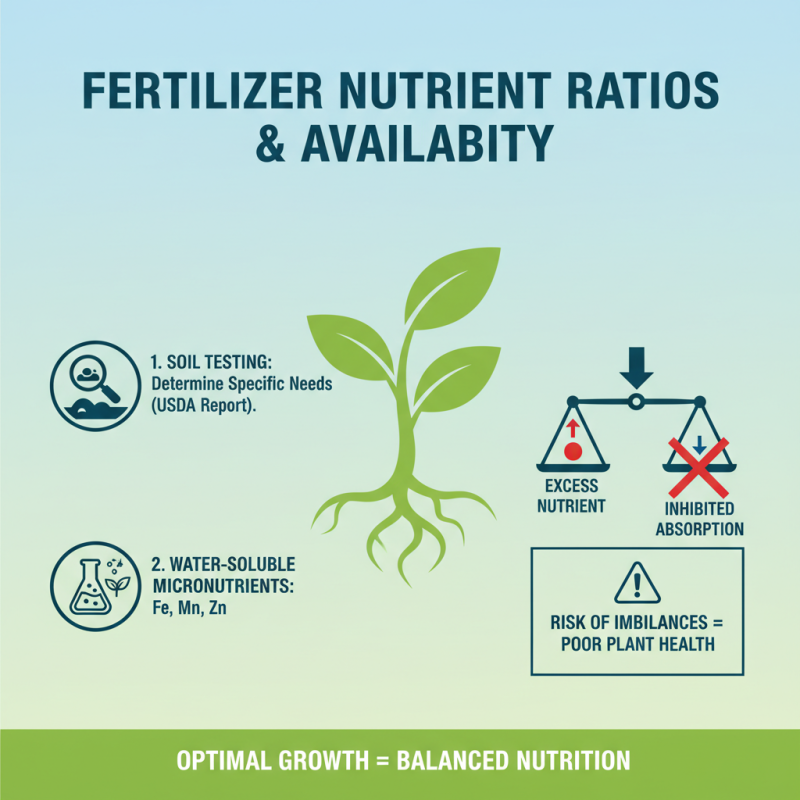
When selecting a water-soluble micronutrient fertilizer, understanding nutrient ratios is crucial. Different plants require various micronutrients, such as iron, manganese, and zinc, for optimal growth. According to a report by USDA, soil testing is essential to determine specific nutrient needs. Without this, you risk imbalances that can harm plant health. For instance, an excess of one nutrient may inhibit the absorption of another.
Nutrient availability also varies significantly among fertilizers. Some micronutrients are more soluble than others, impacting how well they can be absorbed by plants. The International Fertilizer Association indicates that chelated forms of micronutrients have enhanced availability, especially in alkaline soils. However, not every micronutrient product on the market uses these forms, which can lead to inefficient usage.
Consumers must evaluate these aspects critically. Look for fertilizers with balanced ratios that cater to your specific soil conditions. Reviews of nutrient uptake efficiency show mixed outcomes. Research may highlight that while some fertilizers perform well, others may leave you frustrated. Understanding these nuances helps in making informed choices for effective plant nutrition.
Assessing Application Methods and Compatibility with Plant Needs
When selecting a water-soluble micronutrient fertilizer, understanding application methods is crucial. Depending on plant types and growth stages, application methods can vary widely. For instance, foliar application often enhances nutrient uptake quickly. Studies show that plants can absorb micronutrients through their leaf surfaces in as little as 30 minutes. This method generally results in 20-30% more efficient nutrient use compared to soil application.
Compatibility with plant needs is also vital. Micronutrient deficiencies can lead to poor growth and yield. According to industry reports, up to 50% of crops can exhibit signs of micronutrient deficiencies at some stage. For example, iron deficiencies are particularly common in high pH soils. It's essential to assess soil conditions and plant requirements before applying fertilizers. Not all micronutrients are created equal, and some may not integrate well with specific plant types. Regular soil tests can identify what’s lacking, allowing for tailored nutrient applications.
Even experienced growers can sometimes misjudge their plants' needs. Over-fertilization can lead to nutrient lockout. This happens when high levels of one nutrient inhibit the uptake of others. It's a balancing act, requiring constant monitoring and adjustment. Thus, ongoing education and adaptability are key, helping growers achieve the best possible results for their specific agricultural conditions.