Why Choose Water Soluble Micronutrient Fertilizer for Crops?
In modern agriculture, the need for efficient nutrient delivery is critical. Farmers face challenges such as soil depletion and environmental concerns. Water Soluble Micronutrient Fertilizer has emerged as a viable solution. According to the Food and Agriculture Organization, micronutrient deficiencies affect 2 billion people globally, emphasizing their importance in crop production.
These fertilizers improve nutrient uptake in plants. A study by the International Plant Nutrition Institute indicates that water-soluble options can increase yields by up to 30%. This significant boost highlights their role in sustainable practices. Moreover, they allow for targeted feeding, reducing waste and enhancing performance.
Despite these benefits, some challenges remain. Not all farmers are familiar with water-soluble fertilizers. Understanding application rates and timing can be complex. Additionally, this fertilizer type may have a higher initial cost. However, the long-term benefits in crop health and yield often outweigh these concerns. Investing in Water Soluble Micronutrient Fertilizer fosters healthier crops and can improve overall farm profitability.

Benefits of Water Soluble Micronutrient Fertilizers for Crop Yield
Water soluble micronutrient fertilizers have become a popular choice among farmers. They provide essential nutrients directly to the plant through irrigation systems. These fertilizers contain crucial micronutrients like zinc, iron, and manganese. Such nutrients play a key role in plant growth and overall health.
One significant benefit of these fertilizers is their quick absorption. Crops can utilize these nutrients almost immediately. This rapid uptake can enhance plant vigor, helping crops resist diseases. The resulting stronger plants often yield better and healthier harvests. However, there's a risk of over-fertilization if not managed properly. Monitoring nutrient levels is essential for optimal growth.
In addition, these fertilizers help improve the soil's structure over time. Healthy soil supports better water retention and root development. Farmers may notice a difference in crop performance after regular application. Nevertheless, relying solely on one type of fertilizer can lead to imbalances. A diverse nutrient strategy should always be considered for the best results.
Impact of Water Soluble Micronutrient Fertilizers on Crop Yield
Water soluble micronutrient fertilizers contribute significantly to crop yield by providing essential nutrients that may be deficient in the soil. The bar chart above illustrates the percentage increase in crop yield associated with different micronutrients.
Comparison of Traditional vs. Water Soluble Micronutrient Fertilizers
Water soluble micronutrient fertilizers offer a significant advantage over traditional forms. Traditional fertilizers often focus on macronutrients, leaving micronutrients less available to plants. They can lead to nutrient deficiencies, which affect crop yield and health. In contrast, water soluble options dissolve quickly in water, ensuring immediate accessibility.
The precision of application is another key benefit. Farmers can tailor micronutrient levels to specific crop needs. It minimizes the risk of over-fertilization, which can cause environmental harm. Yet, some might worry about application costs and frequency. Adjusting these factors requires careful consideration and management.
Water soluble fertilizers enhance nutrient uptake efficiency. This process boosts growth and yield potential within a short time frame. However, reliance on these fertilizers may lead to neglecting soil health. Long-term soil sustainability remains crucial. Balancing these approaches presents ongoing challenges worth reflecting on.
Why Choose Water Soluble Micronutrient Fertilizer for Crops?
| Dimension |
Water Soluble Micronutrient Fertilizer |
Traditional Micronutrient Fertilizer |
| Nutrient Absorption Rate |
Rapid (up to 95%) |
Slow (around 60%) |
| Application Method |
Fertigation, Foliar Spray |
Soil Application |
| Usage Flexibility |
Highly Flexible |
Limited Flexibility |
| Soil Compatibility |
Widely Compatible |
May Cause Imbalances |
| Environmental Impact |
Lower Runoff Risk |
Higher Runoff Risk |
Key Micronutrients Available in Water Soluble Formulations
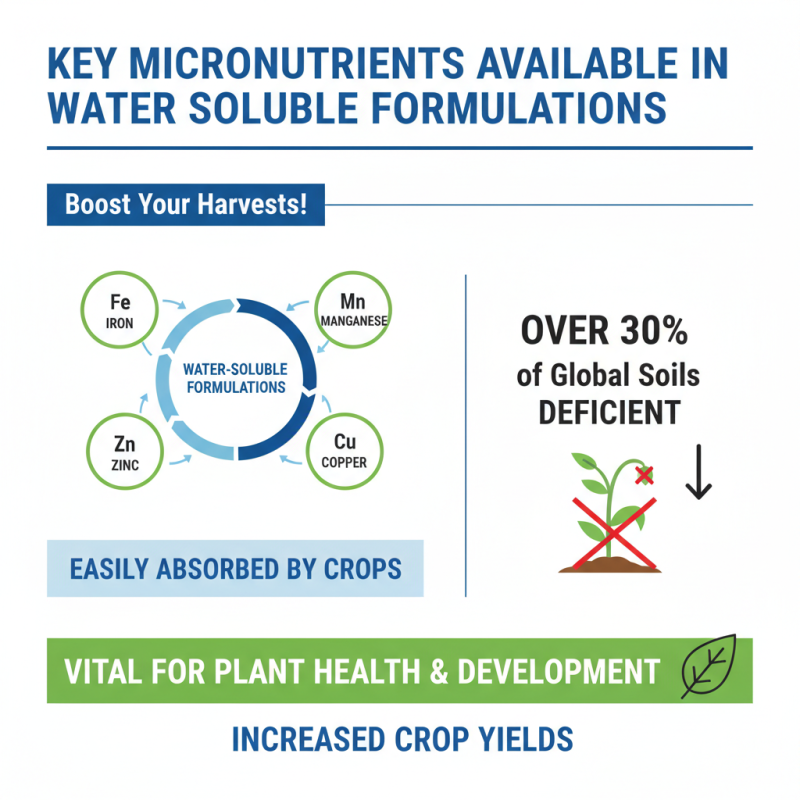
Water-soluble micronutrient fertilizers are becoming essential in modern agriculture. These formulations provide crucial nutrients that are easily absorbed by crops. Key micronutrients such as iron, manganese, zinc, and copper play vital roles in plant health and development. Reports indicate that over 30% of global soils are deficient in these key elements, leading to decreased crop yields.
Iron is particularly significant; it is involved in chlorophyll synthesis. A deficiency can reduce photosynthesis, impacting growth. Systems analyzing soil nutrient levels suggest that supplementing with water-soluble iron can improve yields by 15% or more in specific crops. Manganese and zinc also contribute to enzymes that regulate plant metabolism. Observations from various agronomic studies highlight that adding these micronutrients boosts overall productivity and helps address deficiencies effectively.
Farmers should consider the solubility of fertilizers. Not every nutrient is equally effective when applied in solid form. There can be issues with efficacy in certain soils. Micronutrient availability varies by pH and moisture levels. Water-soluble fertilizers offer a reliable solution to these challenges. This adaptability helps ensure that crops receive the necessary nutrients, even in less-than-ideal conditions. It remains crucial to monitor and assess plants continuously. Sustainable practices will improve overall soil health and crop resilience.
Impact of Water Soluble Micronutrients on Soil Health and Plant Growth
Water-soluble micronutrient fertilizers play a crucial role in enhancing soil health and supporting robust plant growth. These fertilizers provide essential trace elements like zinc, manganese, and iron directly to the plant through irrigation systems. According to a report by the Food and Agriculture Organization, over 30% of farms globally experience micronutrient deficiencies. This often leads to poor crop yields and suboptimal plant health.
The benefits of water-soluble micronutrients extend beyond immediate plant growth. Research shows that they improve soil structure and promote beneficial microbial activity. For example, soils enriched with micronutrients can enhance nutrient absorption rates by up to 50%. A study found that adding zinc and manganese significantly increased the nitrogen-fixing activity in leguminous crops, which can be beneficial in sustainable farming practices.
However, reliance on these fertilizers can pose challenges. Overapplication may lead to nutrient imbalances in the soil. Crop response varies depending on the soil's initial micronutrient status. Therefore, careful soil testing is essential before application. While water-soluble fertilizers are effective, they should be part of a holistic approach to soil management. Understanding their impact on soil health is crucial for long-term agricultural sustainability.
Usage Guidelines and Application Methods for Optimal Results
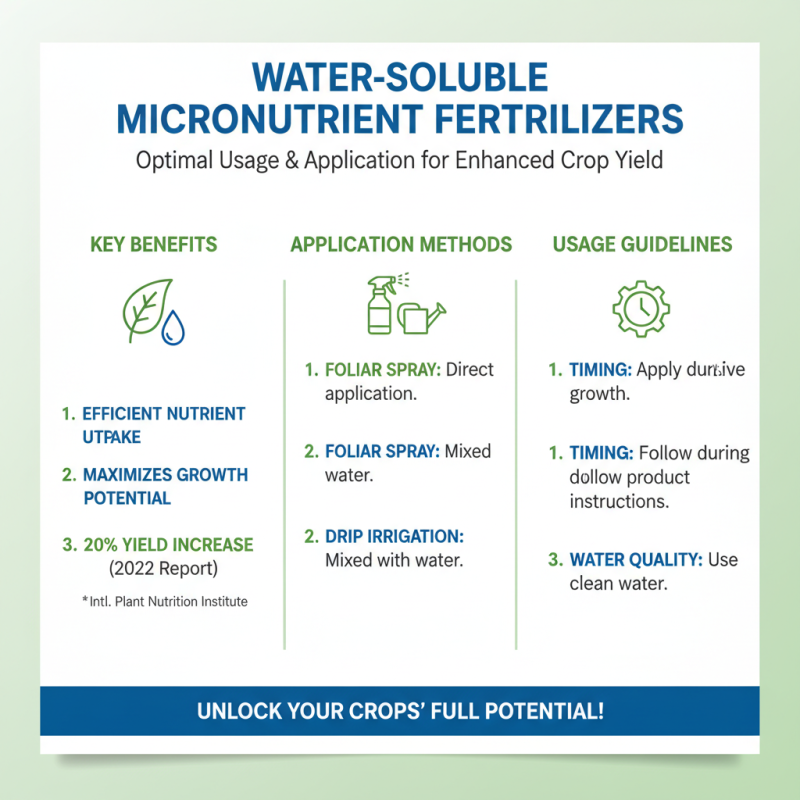
Water-soluble micronutrient fertilizers play a crucial role in modern agriculture. They allow for efficient nutrient uptake by crops, maximizing growth potential. According to a 2022 report from the International Plant Nutrition Institute, crops treated with water-soluble fertilizers showed a yield increase of 20% compared to those with conventional applications. Understanding usage guidelines is key to achieving optimal results.
Applying these fertilizers requires careful consideration. For starters, it's essential to mix them properly with water. A common recommendation is to use a concentration of about 1-2 grams per liter of water. This ensures that nutrients are readily available for absorption. Additionally, timing matters. Applying during the early stages of crop growth can significantly enhance nutrient absorption, enhancing overall plant health. The importance of soil testing should not be overlooked. Knowing the nutrient status of your soil helps tailor applications, avoiding potential nutrient imbalances.
Challenge arises when using these fertilizers. Over-application can lead to nutrient runoff, harming the environment. Surrounding vegetation might suffer from excessive nutrient exposure. It's crucial to find a balance. Regular monitoring of plant health and soil conditions can guide adjustments. Crop response should be documented, helping refine future application strategies.