Choosing the best Water Soluble Phosphatic Fertilizers in 2026 requires more than comparing phosphorus percentages. Crop stage, irrigation quality, soil pH, and application equipment all influence performance. A clear bag label does not guarantee field success. Neither does a high solubility claim.
The International Fertilizer Association’s Medium-Term Fertilizer Outlook 2024–2028 identifies efficiency, affordability, and nutrient stewardship as major industry priorities. FAO data also shows that fertilizer decisions must respond to regional soil conditions and crop demand, rather than relying on uniform application rates. Meanwhile, the World Bank’s Commodity Markets Outlook has documented continued volatility across fertilizer-related commodity markets. That volatility affects farm budgets, product availability, and purchasing decisions in 2026.
Patrick Heffer, a senior fertilizer-industry expert associated with the International Fertilizer Association, has emphasized the value of “the right source, at the right rate, at the right time, and in the right place.” This 4R principle offers a useful test for comparing phosphate products. A clean solution in a 1,000-liter fertigation tank matters. So does low sediment, reliable mixing, and compatibility with calcium-containing inputs. Small mistakes can block emitters or reduce phosphorus uptake.
This guide examines leading Water Soluble Phosphatic Fertilizers through technical data, grower experience, and practical handling concerns. The rankings are not absolute. Local water chemistry may change the result. Product performance can also differ between greenhouse tomatoes, field vegetables, orchards, and broad-acre crops. That uncertainty deserves attention.
Water-soluble phosphatic fertilizers are phosphorus-based fertilizers that dissolve readily in water. They supply phosphorus in a form roots can absorb, usually as orthophosphate. Many products also contain nitrogen or potassium, but phosphorus remains the main nutrient.
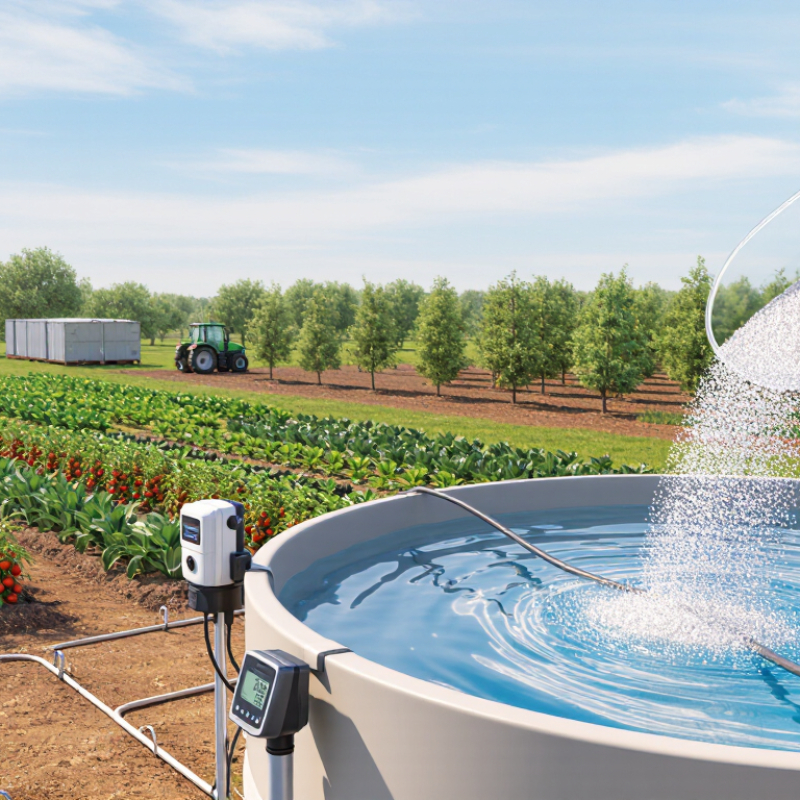
They are commonly used through fertigation, hydroponic systems, and foliar applications. In practical field work, clean dissolution matters. Undissolved particles can block filters, narrow drip lines, or settle inside mixing tanks. Water temperature, hardness, and pH may change performance. Calcium-rich water deserves special attention because it can create insoluble phosphate deposits.
Common materials include water-soluble phosphate salts containing ammonium or potassium. Their value depends on crop demand, soil testing, and application timing. Phosphorus supports root development, energy transfer, and early plant growth, but more is not always better. Excess phosphorus may reduce nutrient balance and increase environmental losses.
Read the guaranteed analysis carefully.
A soluble product is not automatically the best choice. Laboratory solubility may look impressive, yet poor mixing practice can reduce field results. I would test a small batch before preparing a full tank, especially when combining fertilizers or crop-protection products. This step feels slow. It prevents expensive surprises.
Experienced growers also inspect the solution after mixing. A clear tank does not prove perfect nutrient availability, but cloudy water or sediment signals caution. Local soil conditions, irrigation quality, and crop stage should guide the final program.
Water-soluble phosphatic fertilizers dissolve readily in irrigation water and are commonly used for fertigation and foliar nutrition. The chart compares standard fertilizer grades by their guaranteed nitrogen (N), phosphate (P₂O₅), and potash (K₂O) percentages.
Monoammonium phosphate (MAP), diammonium phosphate (DAP), monopotassium phosphate (MKP), and triple superphosphate (TSP) are shown using widely recognized nutrient grades. Actual suitability depends on crop requirements, soil conditions, water quality, and application method.
Water-soluble phosphatic fertilizers are judged by more than their phosphate percentage. Quality begins with the nutrient form. Orthophosphate supports immediate root uptake, while polyphosphate requires hydrolysis before plants can use it. A reliable analysis should state available P2O5, water-soluble P2O5, nitrogen, sulfur, and secondary nutrients clearly. The International Fertilizer Association’s 2024 Medium-Term Fertilizer Outlook expects global fertilizer demand to exceed 200 million tonnes of nutrients by 2028. This rising demand makes consistent nutrient delivery increasingly important.
Solubility is practical, not promotional. A suitable product should dissolve quickly in cool water, leave minimal sediment, and remain stable during fertigation. A simple jar test can expose problems within minutes. Check solution clarity, residue, pH, and electrical conductivity. Excessive salinity may damage young roots, especially in protected cultivation. The FAO Fertilizer and Plant Nutrition Guide emphasizes matching fertilizer concentration with crop demand, irrigation water, and soil conditions. That principle is often overlooked.
Purity also defines performance. Chloride, insoluble particles, and trace contaminants can affect sensitive crops and equipment. A certificate of analysis should include batch data, laboratory methods, and contaminant limits. Clear liquid does not always mean high quality. Some products look clean but form deposits later. This is where testing becomes imperfect, yet necessary. Storage temperature, water hardness, and tank mixing can change results, so field validation should accompany laboratory figures.
Water-soluble phosphatic fertilizers differ more than their phosphate percentages suggest. Monoammonium phosphate, commonly formulated as 12-61-0, supplies nitrogen with highly soluble phosphate. Monopotassium phosphate, often 0-52-34, adds potassium without nitrogen. This matters when crop tissue tests already show sufficient nitrogen. Liquid ammonium polyphosphate can dissolve quickly, but hard water and low temperatures may create compatibility problems.
The International Fertilizer Association’s Medium-Term Fertilizer Outlook 2024–2028 expects global fertilizer demand to keep increasing through 2028. Its analysis also stresses nutrient efficiency, not simply higher application rates. The FAO’s fertilizer-use data supports the same concern: phosphorus losses can reduce farm efficiency and increase environmental pressure. In practical trials, MAP may suit early root development, while MKP fits fruiting stages requiring potassium. Yet this comparison is not universal. Soil pH, irrigation quality, crop variety, and application timing can change the result. Field experience often beats a perfect label.
Tips: Check a recent soil and irrigation-water analysis before choosing a formula. Keep solution temperature, pH, and electrical conductivity under observation. Never mix phosphate products with calcium-containing fertilizers without a jar test. A small tank trial can prevent blocked emitters and wasted nutrients. The cheapest product may become expensive after poor dissolution. That detail is easy to miss.
Crop choice and growing method should guide the product, not marketing claims. Monoammonium phosphate, commonly sold as a fully soluble granular fertilizer, suits maize, wheat, vegetables, and young transplants. Its nitrogen supports early leaf growth, while its acidic reaction can improve phosphorus availability in alkaline soils. It works well through drip irrigation after proper filtration and jar testing. Do not place concentrated granules directly against tender roots.
Monopotassium phosphate fits fruiting tomatoes, peppers, cucumbers, berries, and ornamental crops in greenhouses or hydroponic systems. It supplies phosphorus and potassium without adding nitrogen, which helps when plants become too leafy. It is useful during flowering and fruit filling, but it should not be mixed in the same concentrate with calcium or magnesium salts. Precipitation may block emitters. Small mistakes become expensive.
Urea phosphate is valuable in fertigation where irrigation water or soil is alkaline. Its acidic reaction can support phosphorus uptake and reduce some carbonate-related problems. It may suit orchards, protected vegetables, and high-value crops with controlled irrigation. However, its nitrogen content can disturb fruit quality if applications continue too late. I have seen growers chase darker leaves and delay maturity. Tissue testing, water analysis, and regular root-zone checks provide better guidance than appearance alone. Humidity also matters, because poorly stored soluble fertilizers can cake before use.
Farmers should select water-soluble phosphatic fertilizers from soil tests, irrigation quality, and crop demand. The label’s phosphorus percentage is only one factor. Check whether the product dissolves fully, leaves little sediment, and fits fertigation equipment. A clear jar test can reveal trouble before a blocked filter stops irrigation.
The FAO reported global fertilizer use at about 185 million tonnes of nutrients in 2022. Its data also shows strong regional differences in nutrient application. This matters because phosphorus recommendations cannot be copied between farms. IFA’s 2024 Medium-Term Fertilizer Outlook expects phosphate demand to recover gradually through 2028. Efficient placement remains important as prices and environmental scrutiny increase.
Apply phosphorus near active roots, not across dry soil without moisture. Split applications during early growth can improve availability in high-fixing soils. Keep calcium-rich products separate from phosphate solutions. Hard water may create deposits, even when the fertilizer looks clean. Test electrical conductivity and solution pH before large-scale use. Use clean filters and flush lines afterward.
Do not chase the highest concentration.
Field experience shows that more soluble phosphorus does not always mean better yields. Poor timing, excessive irrigation, or alkaline soil can still waste it. Recheck leaves and soil during the season, then adjust carefully. The perfect schedule rarely survives real weather.
| Fertilizer Type | Typical Analysis (N–P2O5–K2O) |
Main Nutrient Strength | Best-Fit Use | Typical Solution Reaction | Recommended Application Approach | Compatibility Considerations | Selection Rating |
|---|---|---|---|---|---|---|---|
| Monopotassium Phosphate (MKP) | 0–52–34 | High phosphorus and potassium; no nitrogen | Fruit filling, flowering, quality improvement, and late-season fertigation when nitrogen should be limited | Usually mildly acidic to near neutral, depending on concentration and water quality | Suitable for drip irrigation, foliar feeding, and greenhouse systems. Use a low-concentration solution and split applications according to crop demand. | Do not place concentrated stock solutions together with calcium or magnesium fertilizers. Conduct a jar test before tank mixing. | ★★★★★ |
| Monoammonium Phosphate (MAP) | Commonly 11–52–0 or 12–61–0 | High phosphorus with a moderate ammonium-nitrogen supply | Early root development, establishment, transplanting, and pre-flowering nutrition | Generally acidic in the fertilizer zone, which can support phosphorus availability in alkaline soils | Apply through fertigation or as a fully soluble starter fertilizer. Split nitrogen-containing applications where leaching risk is high. | Phosphate can react with calcium and magnesium in concentrated solutions. Avoid mixing with alkaline materials unless compatibility is confirmed. | ★★★★★ |
| Urea Phosphate | 17–44–0 | Water-soluble phosphorus plus readily available urea nitrogen | Fertigation in alkaline irrigation water and crops requiring both nitrogen and phosphorus | Strongly acidic; can lower the pH of the fertilizer solution and irrigation water | Useful for correcting moderately high irrigation-water pH when managed carefully. Apply in split doses and monitor root-zone pH and electrical conductivity. | Acidity may increase corrosion risk in unsuitable equipment. Do not combine concentrated solutions with calcium-containing fertilizers. | ★★★★☆ |
| Diammonium Phosphate (DAP) | 18–46–0 | High phosphorus with more ammonium nitrogen than MAP | Soil application, basal fertilization, and field crops needing nitrogen and phosphorus at establishment | Initially alkaline around dissolving granules, although the nitrification process later produces acidity | Use only a genuinely water-soluble grade for fertigation. Banding or soil incorporation is often more practical than concentrated injection. | High-pH zones around granules can temporarily increase ammonia-loss risk if placed directly with seed. Avoid concentrated contact with calcium or magnesium sources. | ★★★★☆ |
| Phosphoric Acid | 0–52–0 to approximately 0–61–0, depending on concentration | Highly concentrated phosphorus; no nitrogen or potassium | Fertigation, irrigation-water acidification, and phosphorus supply where rapid dissolution is required | Strongly acidic | Inject through acid-compatible equipment using calibrated metering. Add acid to water, never water to concentrated acid, and follow site-specific safety procedures. | Highly corrosive; requires compatible tanks, lines, valves, personal protective equipment, and careful separation from hypochlorite products and alkaline fertilizers. | ★★★★☆ |
| Ammonium Polyphosphate Solution | Commonly 10–34–0 | Liquid phosphorus with moderate ammonium nitrogen | Large-scale field application, starter fertilizer, and fertigation where liquid handling equipment is available | Usually mildly acidic to near neutral, depending on formulation | Apply through calibrated liquid-fertilizer equipment. Agitate or recirculate storage tanks when required and protect the product from extreme temperatures. | Compatibility depends on water hardness, temperature, and formulation. Avoid concentrated contact with calcium or magnesium fertilizers without a jar test. | ★★★★☆ |